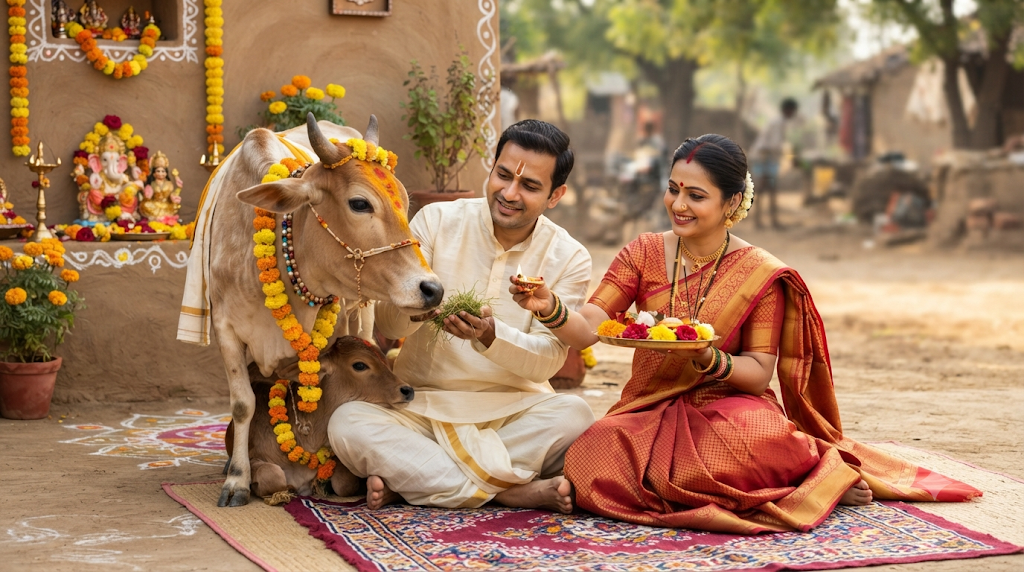
The Aswhina Krishna Dwadashi is known as Govatsa Dwadashi.
Celebrated on the Dwadashi (12th lunar day) of the Krishna Paksha in the month of Ashwin, Govatsa Dwadashi marks the beginning of the Diwali festivities in many parts of India. Also known in some regions as Vagh Baras or Nandini Vrata, this day is dedicated to expressing gratitude to cows—revered as the embodiment of nurturing energy and divinity.
On this sacred day, families observe rituals dedicated to the cow (Gau Mata) and her calf, seeking blessings for prosperity, family well-being, and protection from obstacles.
The Core Rituals of Govatsa Dwadashi
Observing Govatsa Dwadashi involves honoring both the physical form of the cow and its divine representation. Here is how the worship is traditionally performed:
1. Symbolic Depiction and Worship
- If a living cow and calf are not readily accessible, an image or painting of a cow with its calf should be drawn on a clean surface or wall.
- Worship the image using sandalwood paste (chandan), fresh flowers, and other traditional offerings, invoking the divine and benevolent form of the sacred cow.
2. Honoring the Living Gau Mata
- When a cow and calf are present, they are bathed, respectfully decorated with fresh garlands, and adorned with sandalwood paste (chandan), kumkum (verilion), and other auspicious materials.
3. Offering Arghya (Holy Water Oblation)
- At the feet of the cow, Arghya (water offering) should be presented using a traditional copper vessel.
- As you offer the water, chant this powerful mantra with devotion:
kShIrOdaarNava sambhUtE suraasura namaskRutE |
sarvadEvamayE maata: gRuhaaNaarGyam namOstutE |
Meaning: O Mother, born from the ocean of milk, bowed to by suras (gods) and asuras (demons), embodiment of all deities, please accept my Arghya. Salutations to you.
4. Offering Gograsa (First Morsel)
- Following the worship, special preparations made of urad dal (black gram) Vadas are offered to the cow as Gograsa (the sacred first portion of food).
- Feed the cow with love and offer your personal prayers while chanting this mantra:
Sarvadevamaye Devi Sarvadevayalankrathe |
MatharmamaabhiLishitham Sapahalam Kuru Nandini||
Meaning: O Divine Mother, who embodies all deities and is adorned by them, O Nandini, please fulfill all my cherished desires.
Why Govatsa Dwadashi Matters Today
In our fast-paced modern lives, festivals like Govatsa Dwadashi serve as a gentle reminder of our interconnectedness with nature and animals. By pausing to honor the cow—the eternal symbol of selfless giving, patience, and nourishment—we cultivate a spirit of gratitude toward all life forms.
May Gau Mata bless your home with abundance, health, and peace this festive season.
You May Be Interested In:
 ಅಪಮೃತ್ಯು ನಿವಾರಣ ಸುಳಾದಿ | Apamrutyu Nivaarana Suladi By Vijayadasaru
 Ugabhoga | Aaneyu Karedare Aadimoola Bandante| Lyrics|Kannada|Purandaradasa| ಉಗಾಭೋಗ ಆನೆಯು ಕರೆದರೆ ಆದಿಮೂಲ ಬಂದಂತೆ
 [PDF] Karuniso Ranga Karuniso Song Lyrics With Meaning In Kannada English |Purandaradasa |ಕರುಣಿಸೋ ರಂಗ ಕರುಣಿಸೋ ಲಿರಿಕ್ಸ್ |ಅರ್ಥ ಸಹಿತ |ಶ್ರೀ ಪುರಂದರದಾಸರು
 Innashtu Bekenna Hrudhayakke Rama PDF| Lyrics |Kannada |English |ಇನ್ನಷ್ಟು ಬೇಕೆನ್ನ ಹೃದಯಕ್ಕೆ ರಾಮ